

Earlier this week the Real Estate Institute of New Zealand (REINZ) released property market data for June.
It came as no surprise to see that the data continued to reflect a tight market, squeezing further house price growth in a very stretched market. The national median price crept higher to $820,000, from $817,500 in May.
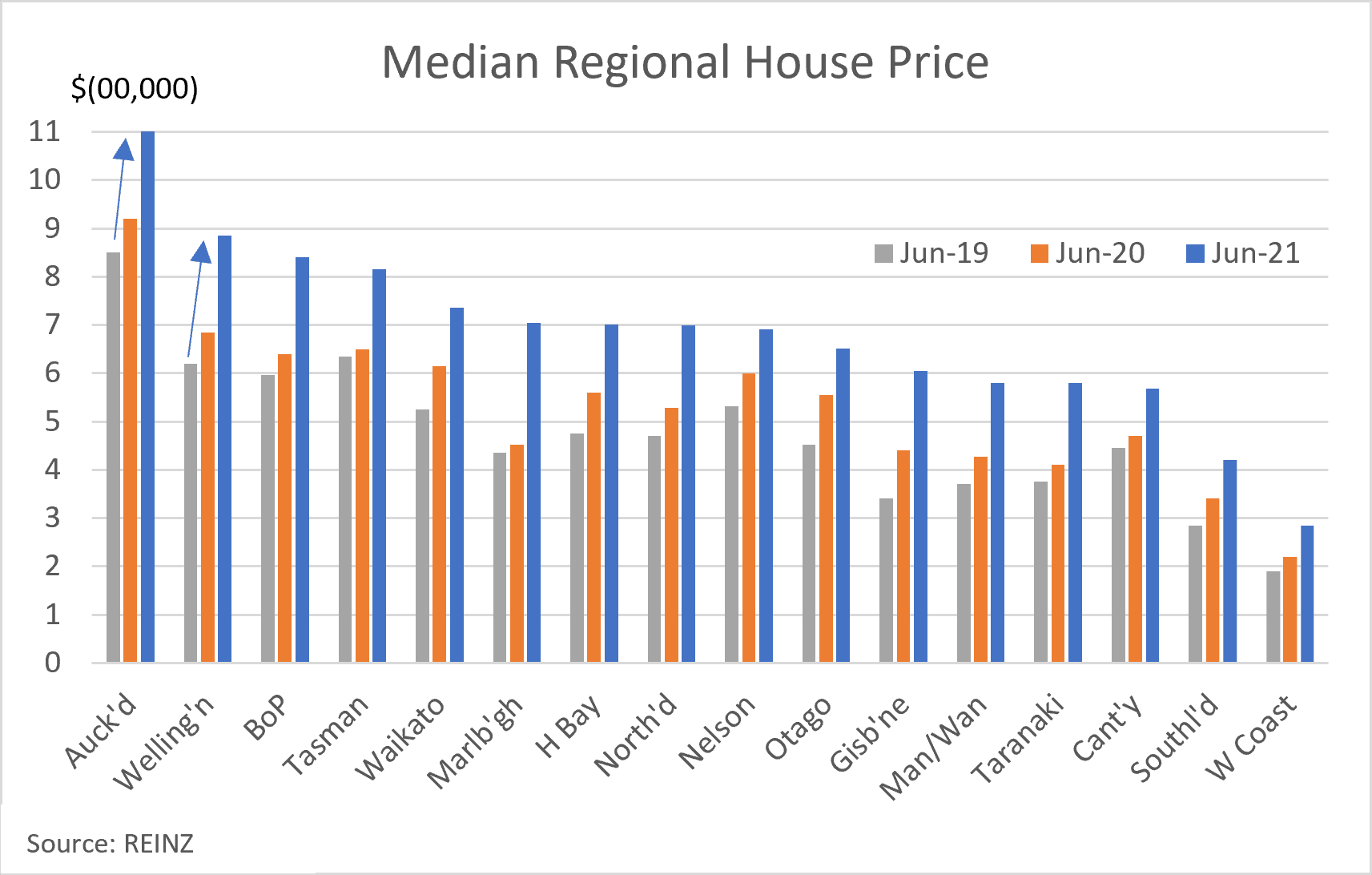
The Auckland region recorded yet another record house price of $1.150 million, from $1.148 million in May. Waikato ($736,000), Taranaki ($580,000), Marlborough ($705,000) and Southland ($420,000) also reported record median prices, while the Manwatu/Wanganui recorded an equal high of $580,000 in June 2021.
FONFA – the fear of not finding anything
The total number of properties available for sale in New Zealand decreased by 33.3% in June to 13,861, this was almost 7,000 fewer properties compared to a year earlier. The REINZ noted that this was the second lowest level of inventory we’ve ever seen in New Zealand.
Jen Baird, Chief Executive at REINZ, observed that with less than 14,000 properties available for sale the fear of not finding anything is becoming a real issue across parts of the country – particularly when houses are selling as quickly as they are at the moment.
Lack of housing supply particularly evident in the Wellington Region
In the Wellington region the median house price of $885,000 was unchanged from the level recorded a month earlier. The year-on-year increase edging just slightly lower to 29.2% from the level recorded in May of 30.3%.
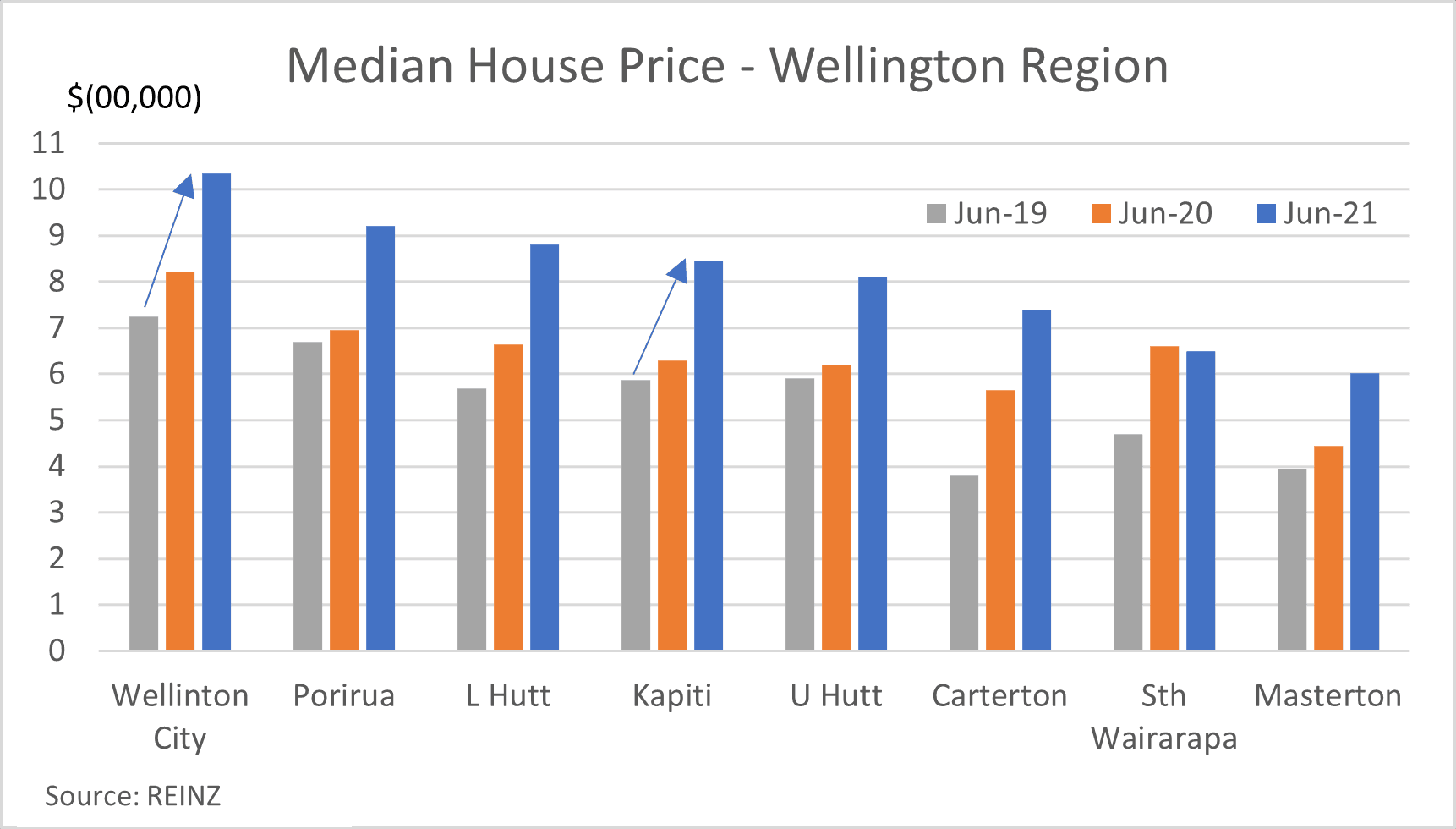
The median price in Wellington City was $1.035 million down from $1.050 million a month earlier. Annual price growth in the city also edged lower to 25.9% from 26.5% recorded in May.
The median house price in Porirua City has settled in the early-mid $900 thousands region in recent months, after peaking at $980,000 in February. In June the city recorded a median price of $921,000 following a 32.5% increase over the year.
In the Hutt Valley annual price growth edged lower in June:
- Nevertheless, Lower Hutt registered a record median price for the third consecutive month. The city recorded a 32.3% increase in the median price over the year to $880,000
- In Upper Hutt, prices edged lower in June to $810,000, registering annual house price growth of 30.6%.
Over the past year, we have witnessed a trend of people looking to the surrounding districts for opportunities to find more reasonably priced property, particularly given the opportunities to work from home presented by our experience with lockdowns in 2020. Reflecting this, price growth has been strong in both Kapiti and the Wairarapa, with prices up sharply over the year:
- In Kapiti, there are signs that house price growth may be on the turn after peaking at an in-sane 39.0% in May. The median price in Kapiti has eased after peaking above $900,000 in April, recording a median price of $845,000 in June down from $895,000 in May. Annual house price growth edged lower to 34.1% in June
- In a bit of a turn-about, the median house price in South Wairarapa was slightly lower
(-1.5%) than the lever prevailing a year earlier. This follows a 32.6% annual increase in May and reflects volatility in the numbers. The median price fell 12.5% from the level in May to $660,000. A large part of the story is volatility as part of a broader upward trend in the median house price, which has breached $700,000 in a more sustained manner in 2021 - The Carterton District reported a record median price of $740,000, although annual price growth eased to 31.0%
- Last month, median house prices in the Masterton District increased by a whopping 47.1%. In June, the median price eased to $602,290 recording still strong annual growth of 35.3%.
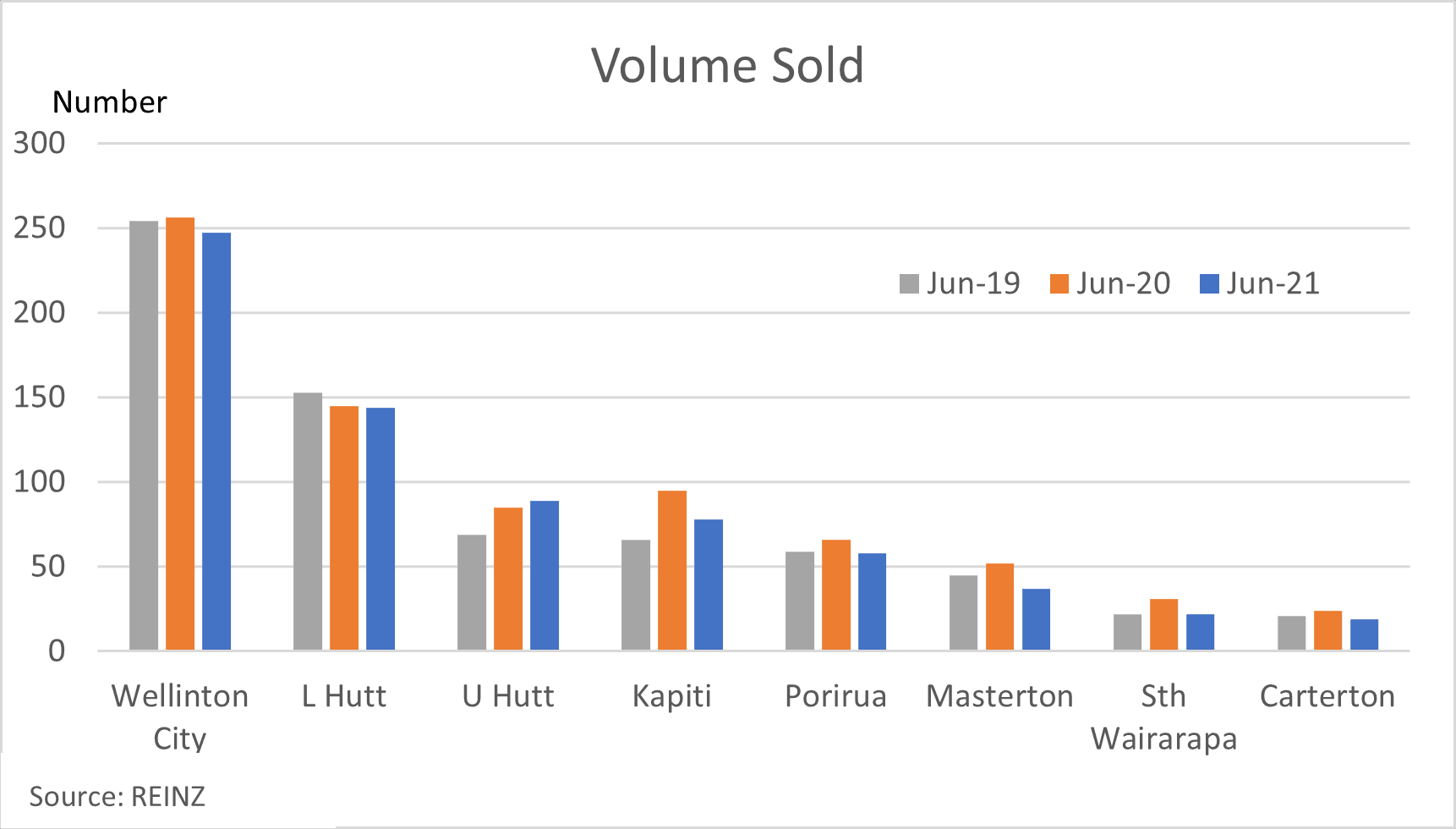
Wellington continues to be the region with the lowest inventory level nationally at just 5 weeks, which is under half the level prevailing a year earlier (11 weeks). This in turn continues to constrain sales growth. The REINZ had the following observations for the region:
- The lack of housing supply is likely to be continuing to push up house prices
- Sales volumes decreased 8.0% annually, no doubt a result of the fall in total inventory
(-14.4% when compared to June last year) - Over the coming months, sales volumes should remain stable if more listings come onto the market but unless the supply issue is resolved, more pressure will be placed on prices.
Will this week mark the turning-point?
The demand for property has been underpinned by low mortgage rates and the fear of not finding anything. But even since June, there has been a sharp turnaround in the outlook for interest rates. Certainly, the prospect and reality of higher rates has come into sharp focus this week, starting with the announcement by ASB on Wednesday that they were increasing their home loan fixed rates. This was soon-followed by the Reserve Bank Monetary Policy Review, which brought the prospect of an increase in the Official Cash Rate (OCR) as early as August.
It was only 3 months ago, in April, that the message from the Reserve Bank Monetary Committee was that tightening remained a distant prospect. Six weeks later in May the Bank reintroduced forecasts for the OCR, implying gradual hikes from the September quarter 2022. This would have been expected to anchor shorter term interest rates into 2022. But since then, a sleugh of strong data has brought about a change.
Falling interest rates have allowed the servicing of larger loans, which in turn has allowed purchasers to pay ever-higher prices in recent years. While this is not the full story and banks assess loan applications at higher ‘test rates’, this period has come to an end, and we expect that this will take some of the wind out of the property market. However, I have chosen my words carefully. Firstly, we are expecting a gradual and modest lift in interest rates, they are expected to remain low by historical standards. Secondly, inventory remains short particularly in the Wellington region. As such, we are not foreshadowing a correction in the market. Just a bit more balance.
Absent a shock to the labour market (or some event), it is more likely that we will see house price growth settle lower, perhaps recording growth of around 2-3% annually as foreshadowed by the Reserve Bank in their May Monetary Policy Statement.
Time will tell.
Article – Tight market squeezes further house price growth in June
Source: REINZ Monthly Property Report
To find me at Mortgage Link Kapiti, head to https://mortgagelinkkapiti.co.nz/
Or find us on Facebook https://www.facebook.com/mortgagelinkkapiti/
Or, to find out more about me http://www.linkedin.com/in/john-bolsover-nz